Choosing the right gaming monitor can make or break your setup. From refresh rates that keep gameplay buttery smooth to display technologies that bring every scene to life, the right screen can completely change how you experience your favorite titles. With so many specs — resolution, panel type, response time, adaptive sync — it’s easy to get lost in the technical jargon. But finding the perfect balance between performance, visuals, and price doesn’t have to be complicated.
In this guide, we’ll break down what really matters when picking a gaming monitor in 2026. Whether you’re chasing ultra-competitive performance with a 240Hz display or crave cinematic visuals for immersive single-player adventures, we’ll help you understand the key features, compare top models, and make an informed decision for your setup.
Our Top Picks:
- ASUS ROG Swift OLED PG27UCDM
- Alienware AW2725DF OLED
- MSI MPG 321URX QD-OLED
- ASUS TUF 27” 1440P VG27AQM5A
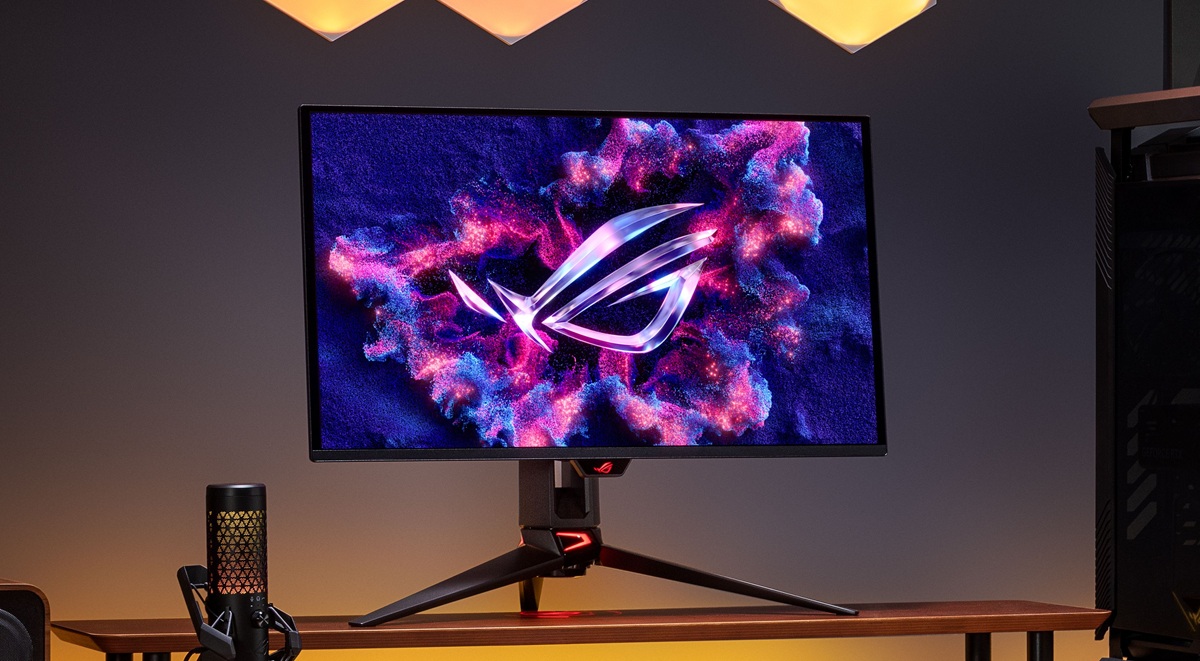
ASUS ROG Swift OLED PG27UCDM
The Asus ROG Swift PG27AQDP is the new king of the hill when it comes to high-performance OLED gaming monitors. The ROG Swift PG27AQDP has the same 2560 x 1440 resolution as our previous favorite, the Alienware AW2725DF, but boasts a maximum refresh rate of 480 Hz (instead of 360 Hz).
Our testing showed a brightness of 400 nits in SDR content and 1,300 nits in HDR content. Calibration was also stellar straight out of the box, while contrast and overall color reproduction were excellent (as expected from a modern OLED panel). Excellent video processing and tons of gaming-centric features make the ROG Swift PG27AQDP a must-have for discerning gamers.
Among the OLED competition, the PG27AQDP was tied for first place in response time (just two milliseconds), while it registered just 15 ms for the input lag test. That put it in second place behind its larger brother, the PG32UCDP. However, it’s hard to live up to the PG32UCDP’s 11-millisecond showing, and 15 ms is nothing to scoff at (and the PG32UCDP also had an advantage by running the test at FHD instead of QHD).
We had no trouble playing games like Doom Eternal at 340 fps at QHD resolution with a GeForce RTX 4090 on the PG27AQDP. However, we didn’t have enough computing muscle to reach the monitor’s upper 480 fps limit, although perhaps a GeForce RTX 5090 could get the job done.
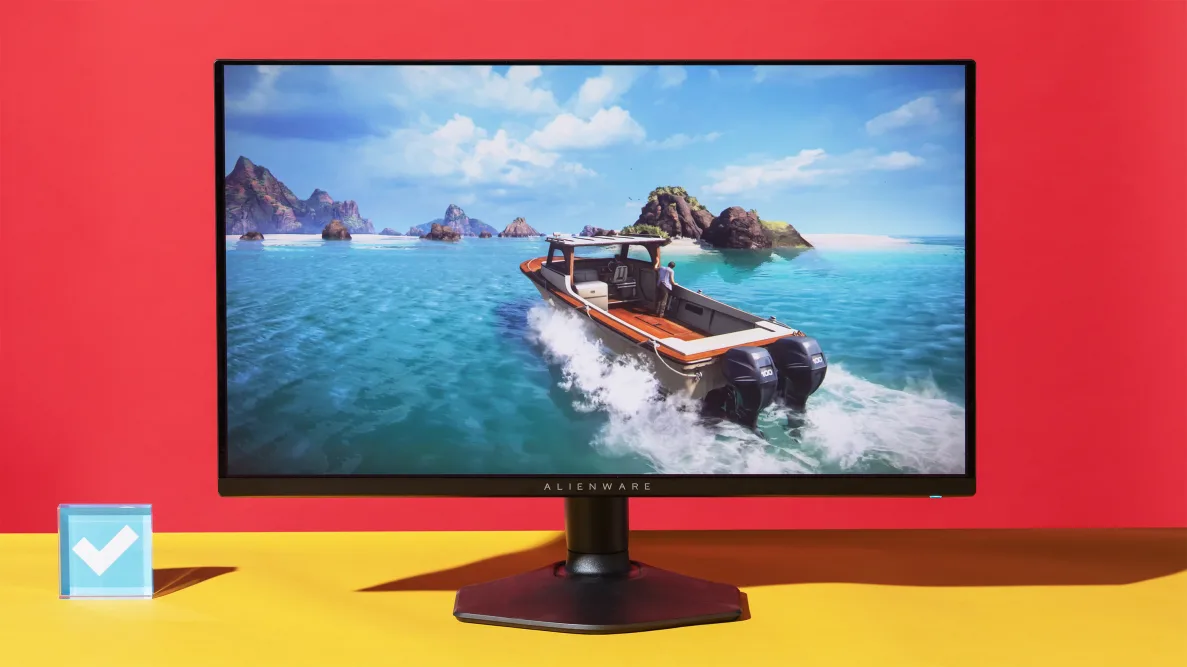
Alienware AW2725DF OLED
The Dell AW2725DF is outstanding for PC gaming. It has an extremely fast 360Hz refresh rate, and its near-instantaneous response time results in extremely crisp images. It also has very low input lag, which creates a responsive gaming experience. However, without HDMI 2.1 bandwidth, you can only take full advantage of the monitor over DisplayPort. It also has noticeable VRR flicker with changing frame rates. On the plus side, it has outstanding picture quality, as its near-perfect contrast ratio means deep blacks are visible next to bright highlights in dark rooms, and small highlights get bright enough to pop.
The Dell AW2725DF is one of the best gaming monitors available and is truly outstanding in the 27-inch gaming monitor category. Its gaming performance and image quality are among the best available, making this monitor an excellent choice for esports gamers and those looking for a beautiful, immersive gaming experience. It’s also an outstanding choice for viewing media, though you won’t see the full details of modern 4k shows and movies as it only has a 1440p display, and you’d have to consider the Dell Alienware AW2725Q if you want a 4k QD-OLED.
However, while QD-OLEDs generally offer slightly better performance than WOLEDs, WOLEDs can have some advantages in brighter environments. For example, the LG 27GS95QE-B has fantastic gaming performance, with the same near-instantaneous response time, and it displays deeper blacks in bright rooms. That said, it has a lower 240Hz refresh rate, and its HDR colors look less vivid.
Reasons to buy:
- Deep and inky blacks in dark rooms.
- 360Hz refresh rate and VRR support.
- Near-instantaneous response time.
- Low input lag.
- Displays bright and vivid colors.
Reasons to avoid:
- Limited to HDMI 2.0 bandwidth.
- Noticeable VRR flicker with changing frame rates.
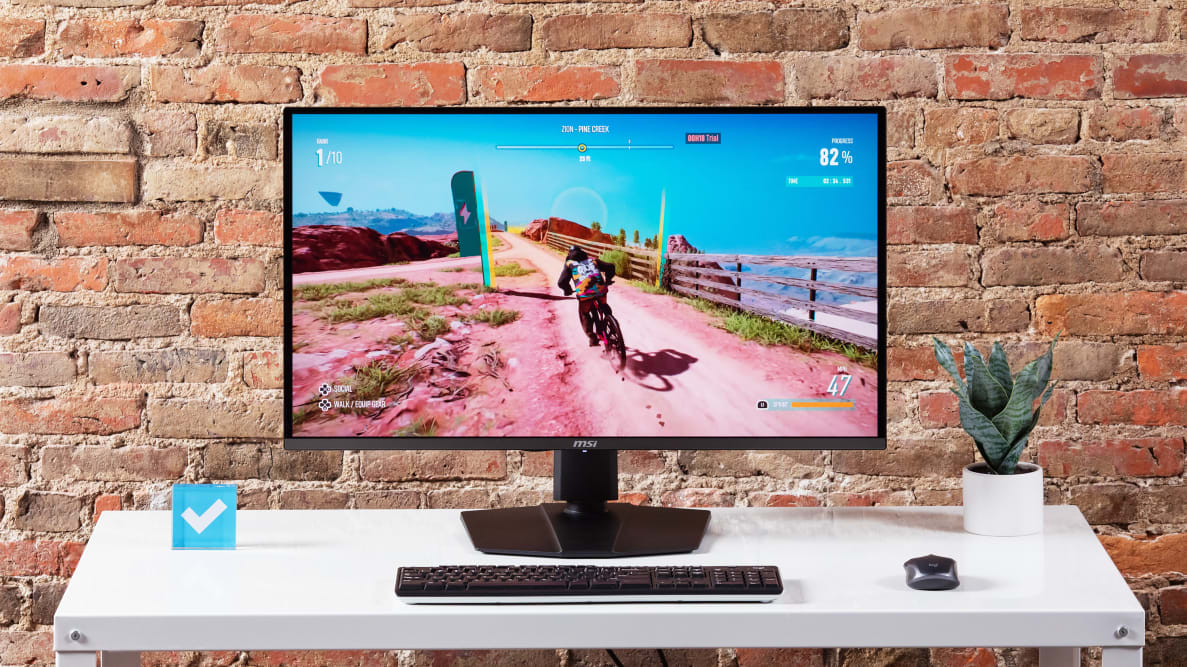
MSI MPG 321URX QD-OLED
Being an OLED, it’s got response times that make other monitors blush. With a 240 Hz refresh rate and a stated 0.03ms response time, it’s about as speedy as you’ll get without opting for an esports-focused mega-refresh rate display, and most of those focus on 1080p resolution. Here, you get the full 4K shebang.
And what a panel. The color reproduction is sumptuous, thanks to an excellent glossy coating and all that OLED goodness, and the blacks are great, too. QD-OLED displays can look a little grey under lots of ambient light, but it’s not as big an issue here as we’ve seen on other monitors of this type.
Of course, being an OLED display, there’s always burn-in to worry about, but the MSI does its darndest to mitigate that with plenty of built-in tech. And the three-year burn-in warranty should take some of the anxiety out of the equation.
The DisplayHDR 400 mode is plenty punchy, while the 1,000-nit HDR mode is better for highlights. It’s a bit of a pain to switch between them, but then, HDR is still a mess on Windows, unfortunately.
Design-wise, it’s nothing particularly special, but then it’s not a bad-looking chassis either. MSI has kept the cost down in certain regards, it’s true, but really, what you care about here is that fantastic panel, for a reasonable price.
What you end up with is a 32-inch 4K OLED monitor that can often be found for $899 or less. That’s in stark contrast to its 32-inch OLED competition, which normally ranges around the $1,100 to $1,300 mark. And really, when you factor in what you’re getting here and the substantial costs of OLED technology as a whole, that makes it a bit of a bargain.
All things being relative, of course. But this is a staggeringly good display that undercuts its rivals significantly, and as a result, it’s the best gaming monitor you can buy right now. It can be a little difficult to get hold of as a result, but if you manage to snag one of these, you’re getting all the main benefits of OLED tech for less.
If you want OLED fun but don’t need the 4K resolution, the MSI MPG 271QRX is worth a look, or if you want something more budget, then the IPS Gigabyte M28U is our top pick. Still, the MSI MPG 321URX is an OLED display at prices that just about start to make sense, and as a result, it’s the one to beat.
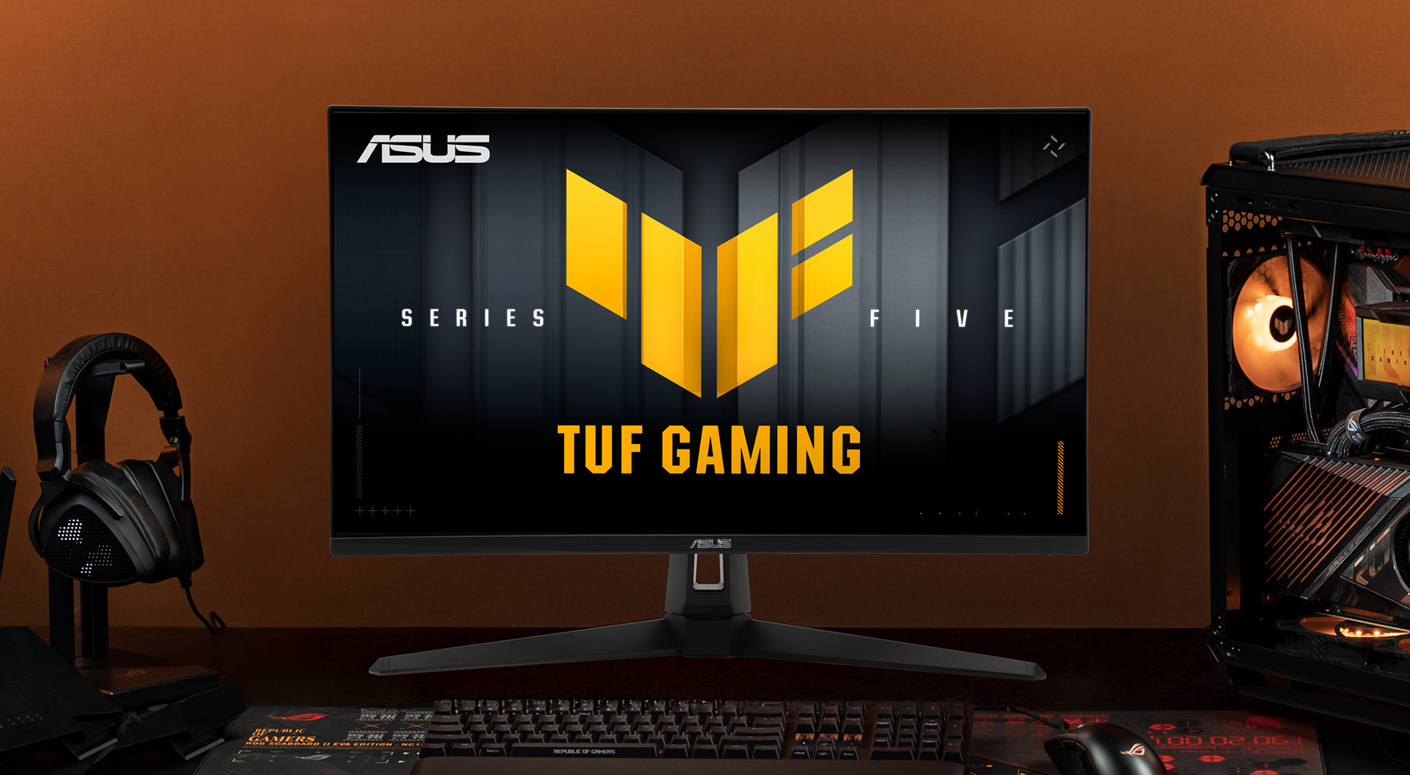
ASUS TUF 27” 1440P VG27AQM5A
Our budget pick is the ASUS TUF Gaming VG27AQM5A, a 27-inch 1440p gaming monitor that delivers performance usually found in much more expensive displays. It features a Fast IPS panel with a very high 300Hz refresh rate and an ultra-quick 0.3ms response time, making it an excellent choice for competitive games where smooth motion and fast reactions matter. The QHD resolution keeps visuals sharp while still being easier to drive than 4K, striking a great balance between performance and image clarity.
Despite its budget-friendly positioning, the monitor includes several premium gaming features. It supports AMD FreeSync Premium and NVIDIA G-SYNC compatibility to reduce screen tearing, while ELMB Sync helps minimize motion blur during fast gameplay. Color performance is also solid for the price, covering about 95% of the DCI-P3 color space, so games look vibrant and detailed. Overall, the ASUS TUF VG27AQM5A offers an impressive combination of speed, smoothness, and visual quality, making it one of the best value gaming monitors for players who want high refresh rates without paying flagship prices.